
Metabolic Adaptation in Response to Energy Imbalance
Adaptive Mechanisms in Older Adults - Evidence-Based Overview
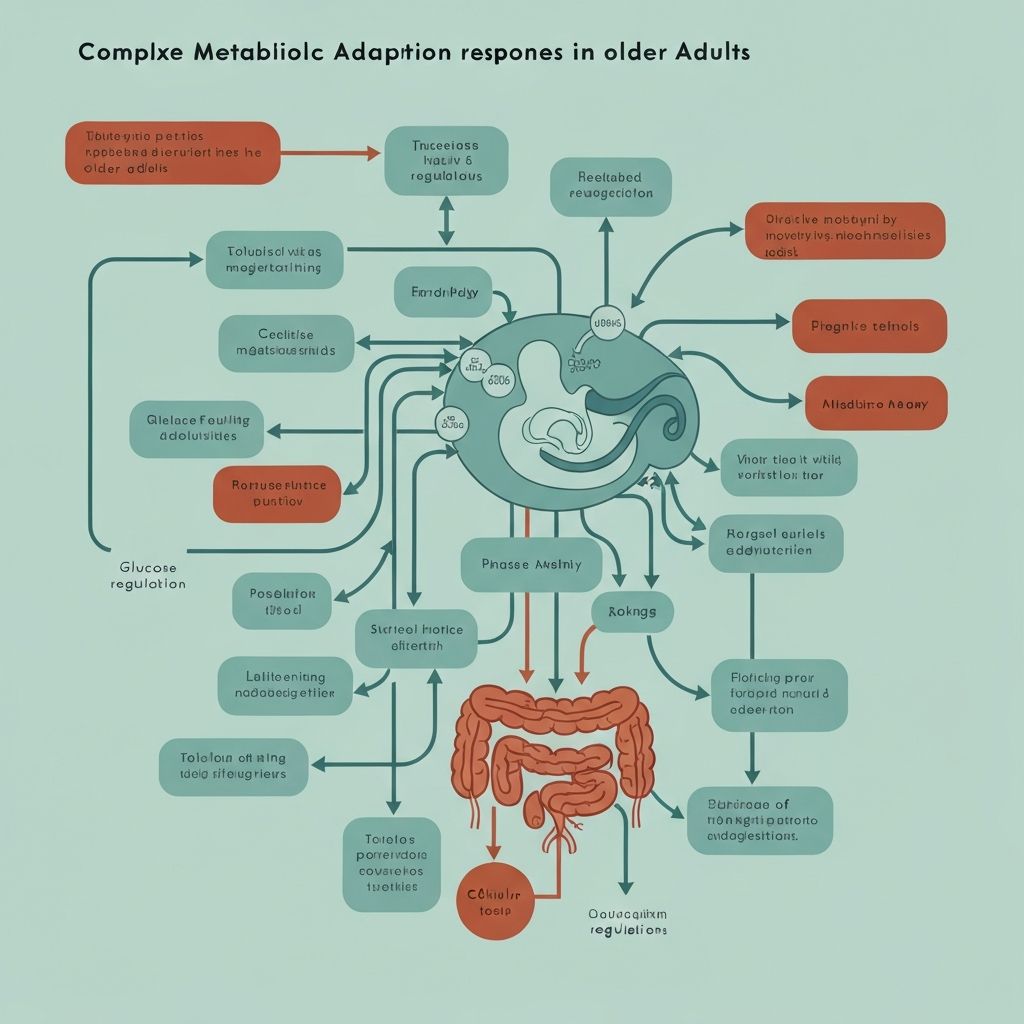
Introduction
Beyond structural physiological changes occurring with age, the human body employs dynamic adaptive mechanisms in response to perceived energy imbalance. Metabolic adaptation—the adjustment of energy expenditure in response to energy availability—represents an important regulatory phenomenon with potential age-related modifications. This article explores the scientific observations regarding metabolic adaptation in older populations.
Definition of Metabolic Adaptation
Metabolic adaptation refers to changes in energy expenditure that occur in response to alterations in energy availability or perceived energy status. This includes:
- Adaptive Thermogenesis: Increase in energy expenditure in response to energy surplus (overfeeding)
- Metabolic Suppression: Decrease in energy expenditure in response to energy deficit (underfeeding or fasting)
- Efficiency Changes: Alterations in mechanical efficiency and metabolic efficiency in response to sustained energy imbalance
Metabolic adaptation occurs through both behavioral mechanisms (altered activity) and physiological mechanisms (hormonal, neural, and cellular changes).
Adaptive Responses to Energy Deficit
During periods of reduced energy availability, organisms employ multiple adaptive mechanisms:
Metabolic Suppression
Reduction in resting metabolic rate and energy expenditure, mediated by hormonal changes (reduced thyroid hormone, sympathetic activity) and behavioral modifications.
Substrate Utilization Changes
Increased reliance on fat oxidation and preserved protein metabolism through metabolic substrate switching.
Activity Reduction
Decreased spontaneous movement and activity level, reducing total daily energy expenditure.
Adaptive Responses to Energy Surplus
Conversely, during periods of energy surplus, adaptive thermogenesis mechanisms increase energy dissipation:
- Increased resting metabolic rate and thermogenic responses
- Enhanced sympathetic nervous system activity
- Increased brown adipose tissue thermogenesis (particularly relevant in younger individuals)
- Increased spontaneous activity and movement patterns
- Enhanced substrate oxidation, particularly carbohydrate oxidation
Age-Related Modifications in Metabolic Adaptation
Research suggests that metabolic adaptation processes may be modified with advancing age:
Adaptive Thermogenesis During Overfeeding
- Some studies suggest reduced adaptive thermogenesis response to energy surplus in older adults
- Reduced sympathetic nervous system responsiveness may contribute
- Diminished brown adipose tissue thermogenic capacity with age
- Results in less efficient energy dissipation during caloric excess
Metabolic Suppression During Energy Deficit
- Some evidence indicates metabolic adaptation to energy deficit may become more pronounced with age
- Greater reductions in resting metabolic rate during energy restriction
- Enhanced hormone-driven metabolic suppression responses
- Potentially greater difficulty maintaining energy balance during periods of reduced intake
Hormonal Mediation of Metabolic Adaptation
Multiple endocrine systems mediate metabolic adaptation responses:
- Thyroid Hormones: Modulate basal metabolic rate and thermogenesis in response to energy availability
- Sympathetic Nervous System: Catecholamine-mediated thermogenesis and metabolic rate changes
- Leptin: Adipokine signaling reflecting energy stores; declines with energy deficit triggering metabolic suppression
- Growth Hormone: Responsive to energy balance status; modulates protein metabolism
- Cortisol: Stress hormone with metabolic regulatory effects
Mechanistic Mechanisms at Cellular Level
Beyond hormonal regulation, cellular-level mechanisms contribute to metabolic adaptation:
- Mitochondrial Regulation: Changes in mitochondrial biogenesis and oxidative capacity
- Enzyme Activity: Altered expression of metabolic enzymes affecting substrate utilization
- Autonomous Nervous System: Altered sympathetic and parasympathetic signaling
- Cellular Signaling Pathways: AMPK, mTOR, and other nutrient-sensing pathways
Behavioral Components of Metabolic Adaptation
Metabolic adaptation involves significant behavioral components:
- Activity Level Changes: Reduced spontaneous activity during energy deficit
- Postprandial Thermogenesis: Energy cost of processing and absorbing nutrients
- Appetite Regulation: Changes in hunger and satiety signaling in response to energy balance
- Food Selection Preferences: Shifts in dietary preferences based on metabolic state
Duration and Magnitude of Adaptation
Metabolic adaptation exhibits complex time courses:
- Acute adaptations occur within hours to days of energy imbalance
- Chronic adaptations develop over weeks to months of sustained energy imbalance
- Some adaptations persist even after return to energy balance
- Magnitude and duration of adaptation vary considerably across individuals
Implications for Energy Balance in Midlife
Understanding metabolic adaptation in older adults provides context for comprehending energy balance regulation. The relative modification of adaptive thermogenesis and suppression mechanisms with age may influence individual responses to energy imbalance.
Individual Variation and Research Frontiers
Substantial variation exists in the degree and rate of metabolic adaptation across individuals. Current research explores genetic modulators, epigenetic factors, and behavioral determinants of adaptation responses. Ongoing investigations aim to clarify mechanisms and individual variation in metabolic adaptation across age groups.
Related Topics
Explore: Age-Related Decline in Basal Metabolic Rate